
Image-Based Prompt Injection: CrossMPI and the Next AI Security Threat
Context
Organizations are racing to adopt AI that sees and reads. Large vision-language models, or LVLMs, power everything from automated analytics to smart assistants. But security teams mostly focus on text. They sanitize prompts. They filter keywords. They assume images are safe.
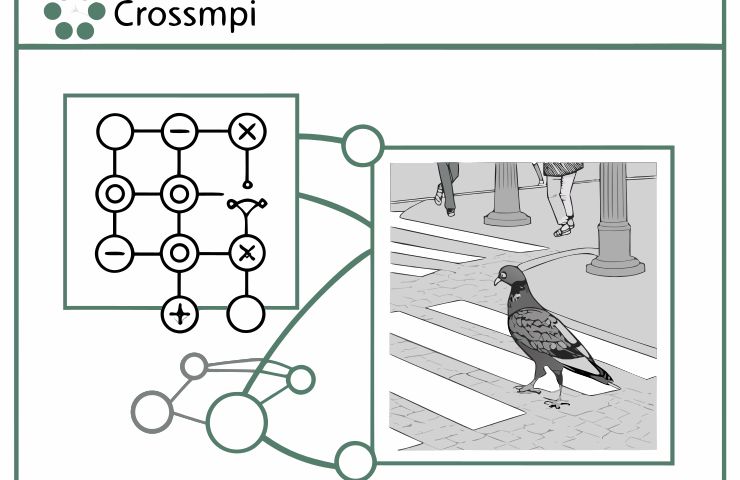
That assumption is breaking. Researchers at Xidian University just introduced CrossMPI, an image-based prompt injection attack. No text edits. Just pixel tweaks. Yet it steers how a multimodal AI interprets both the image and the user’s question.
Historical Context
Early prompt injection targeted text-only LLMs. Attackers slipped commands into web pages or documents. Models read the hidden instructions and bypassed safety rules. Defense teams built text sanitizers and layered prompts. That limited text attacks, but it left the image door wide open.
Researchers then showed that images could carry hidden text or steganographic prompts. That sparked a wave of experiments. But these still relied on embedding words inside pictures. CrossMPI goes further: it uses pure adversarial perturbations without any readable message.
Academia and security vendors have been sounding the alarm since 2023. But adoption of formal image defenses remains limited. CrossMPI raises the bar and makes clear that passive image pipelines are a liability.
What’s Changed
Traditional prompt injection attacks embed malicious instructions in text. Defenses rely on sanitizing words and enforcing system prompts. CrossMPI flips the script. The attacker only perturbs the image input. The text stays benign.
Under the hood, CrossMPI optimizes pixel-level changes so subtle that a human won’t notice them. But inside the model, those tweaks shift hidden states where visual and textual data fuse. The result? A benign query can trigger attacker-controlled behavior.
This shift matters because images are everywhere. Dashboards. Product photos. Insurance claims. Each image upload is a potential attack vector. And no security team was scanning pixels—until now.
How CrossMPI Works
Step one: pick the target outcome. It could be a misclassification, a hidden instruction, or a tool call in an agent pipeline. Step two: run an optimization that nudges pixel values. The goal is to push the model’s joint representation toward the attacker’s desired result.
These perturbations aren’t random noise. They’re crafted in the model’s hidden state space, the layer where image embeddings and text tokens combine. That layer drives everything the AI outputs. Change it, and you change the answer.
The team started by analyzing how vision and language signals merge inside a Transformer model. They mapped out the hidden-state trajectories that lead to various answers. Then they reversed-engineered the pixel tweaks needed to steer those trajectories.
They validated the approach across multiple LVLM architectures. The attack transferred between models, suggesting it doesn’t hinge on a single encoder design. That transferability raises the stakes: an attacker doesn’t need white-box access to every target.
Previous image-based attacks relied on visible overlays or steganographic text. CrossMPI uses pure adversarial pixel tweaks. No hidden words. No signage. Just tiny shifts in color or intensity. Enough to hijack the model’s reasoning.
Evidence and Validation
The attack was detailed in an arXiv paper by the Xidian University team. They tested it on open-source models in controlled experiments. Success rates ran high in lab settings, though exact numbers vary by architecture and prompt.
The Cloud Security Alliance confirmed that LVLMs—including GPT-4V, Claude 3, and Gemini—are broadly vulnerable to image-based prompt injection. Their 2026 research note catalogs techniques from typographic overlays to adversarial perturbations and flags CrossMPI-style attacks as a mature threat.
Industry blogs from cybersecurity vendors and academic surveys back it up. Every model that fuses pixels and text looks at those pixels for instructions. And attackers can hide commands in the noise.
A GitHub project called multimodal_injection replicates similar concepts, though CrossMPI’s hidden-state optimization is more refined. Medical imaging studies also show that adversarial pixels can rewrite diagnostic outputs—reinforcing that no domain is off limits.
Cisco’s AI research blog analyzed prompt injection success rates and concluded that pixel-based attacks can achieve high impact with minimal perturbations. They flagged a lack of shared benchmarks as a barrier to industry-wide defense planning.
Why It Matters for Enterprise AI
Your AI agent sees a dashboard. It reads a document. It now digests images too. If an attacker slips in a malicious image, they can bypass text filters and system prompts. They can exfiltrate data or trigger harmful actions.
Imagine scanning an infographic. Or uploading a photo. You think you’re safe because you sanitized the text. But the image carries a payload. Your AI assistant misreads data points. It misroutes a transaction. It leaks confidential files.
For orgs using vision-enabled AI in finance, healthcare, or operations, this expands their risk surface. A compromised perception layer can break governance models. It can defeat policies you thought were airtight.
For customer-facing bots, the risk is reputational. A malicious image in a support chat could lead to policy violations or brand damage. In automated workflows, the risk is operational. A trafficked infographic could trigger fraud checks or false approvals.
Physical-world prompt injection is already a reality. Attackers can post subtle signage or tamper with product labels. When an LVLM-equipped agent scans the scene, it could be misled into unwanted actions, from misrouting packages to misidentifying safety hazards.
Defenses Under Development
Text sanitization alone won’t cut it. You need to look at images. Several techniques are in play:
- Adversarial training on images to harden vision encoders.
- Anomaly detection that flags unusual pixel patterns.
- Robust feature learning that filters out suspicious noise.
- Architectural separation of perception and control logic.
- Policy enforcement that restricts tool calls when inputs include untrusted media.
Tools like VLMGuard aim to score the maliciousness of image prompts. Cisco and other vendors are experimenting with pixel-inspection firewalls. Yet these are early stage. No silver bullet yet.
The Cloud Security Alliance recommends a multimodal threat model. They advise scanning all input channels, running adversarial tests as part of red-team exercises, and enforcing stricter policies on high-risk actions triggered by image inputs.
Some AI platforms plan to offer built-in robustness features. Expect version updates that include pixel-level sanitization, per-image anomaly scoring, and gated execution paths for untrusted content. But these features may come at the cost of slower response times and higher compute bills.
Investor Implications
Security is sprinting to catch up with AI. According to CSA, the cloud and AI security market is poised for growth as orgs hunt for solutions. Startups and incumbents building multimodal defense tools are the obvious winners.
Vendors that can integrate image analysis into existing security stacks will grab mindshare. Think next-generation firewalls that scan pixels as well as packets. Think SIEM platforms that ingest image threat intel.
On the flip side, AI providers face pressure. They need to demonstrate resilience against CrossMPI-style attacks or risk losing clients. Feature differentiation will shift from pure accuracy to robustness and security certifications.
M&A potential is high. Security startups with proven image-defense tech could see acquisition offers from major AI vendors seeking to close the gap quickly. That’s a signal for investors: look for niche players building image threat-intel feeds or adversarial training toolkits.
Funding rounds for AI security firms jumped in recent quarters. Investors are pricing in a wave of demand. Companies without image defense capabilities risk being side-lined in enterprise deals.
Risks to Watch
No standard metrics. No unified benchmarks. Without that, buyers can’t compare defenses. They’ll chase the marketing hype instead of true protection. A recipe for false confidence.
There’s a talent gap. Deep expertise in adversarial ML is rare. Companies that can attract researchers with CV and NLP background will be steps ahead. Others may struggle to implement defenses even if they understand the threat.
Regulators are paying attention. AI safety frameworks are starting to reference adversarial threats. Failure to meet emerging standards could lead to compliance headaches, fines, or bans in regulated sectors.
Beware vendors promising foolproof solutions. The field is too young for absolute claims. Scrutinize proof-of-concept data and ask for third-party audits before committing capital.
Actions for Investors
Assess your portfolio for AI exposure. Which companies rely on image-capable AI agents? Dig into their security roadmaps. Are they addressing multimodal threats?
Look at startups tackling adversarial defense. Evaluate their tech maturity, customer traction, and integration capabilities. Early movers in image-based security could be acquisition targets.
Monitor AI platform vendors. Will they roll out built-in adversarial defenses? Their roadmap announcements will signal where the market is heading.
Consider building or backing industry consortia to develop shared testing standards. A common benchmark for image prompt injection resilience can speed adoption of effective defenses sector-wide.
Finally, factor in regulation. Portfolios heavy on healthcare or finance may face tighter scrutiny. Companies that move early on defense stand to gain a compliance edge.
Bottom Line
CrossMPI changes the game. It shows that a single image can hijack a vision-language AI’s decisions without touching the text. The era of text-only defenses is over.
Expect demand for image-level security to explode. Vendors and AI platforms that act fast will win. Those that lag risk becoming collateral damage in the next wave of AI-driven attacks.
Don’t wait for a headline-grabbing breach. Image-based prompt injection attacks are not hypothetical—they’re documented and evolving. Time to treat images as code inputs and secure them accordingly.