
My Lifelong Obsession with Prompt Engineering
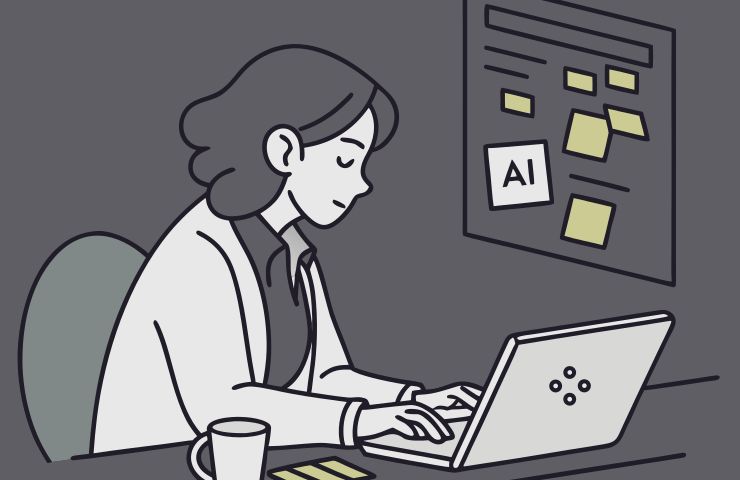
It was a rainy evening when I first stumbled onto a live demo of Gemini — Google’s large language model — and I sat, mesmerized, as it turned a simple request into dozens of lines of ready-to-run Python. Something clicked in me. Before that moment, coding felt like a solo climb up a steep wall; afterward, it was like tapping into a collaborator who whispered solutions I’d never imagined.
Since then, I’ve made it a ritual. Late nights, early mornings, even during frantic deadlines, I’ve found myself pausing to refine a prompt or coax a cleaner output from GitHub Copilot. When I faced a rough patch in life — a breakup, job uncertainty, or burnout — I didn’t reach for a distraction; I reached for that blinking cursor and a carefully worded prompt. It was my comfort zone, my little workshop of ideas.
There were nights during college when, while my friends slept, I’d be hunched over my laptop, coaxing an LLM to help debug a stubborn recursion. In the hush of the library, the hum of servers became a lullaby. On a coding retreat far from home, I used prompt logs as a makeshift journal, revisiting them later like a time capsule of my growth. Even on vacation, I sneak in quick experiments—taming a new API, exploring a niche library, all through ritualized prompts.
I’m shameless enough to admit that during my honeymoon, I slipped out of bed before dawn to refine a prompt around state management in React. My partner teased me, but I couldn’t resist. That pre-dawn quiet and the glow of that AI-generated snippet felt like a secret thrill.
I call it my obsession. Some people collect stamps or binge-watch shows; I gather best practices for crafting prompts, delighting in the challenge of squeezing clarity and context into a single line. It’s become as essential to my day as a morning coffee — maybe more so.
From First Prompt to Daily Ritual
My early prompts were clumsy. I’d ask Gemini to write a sorting algorithm, and it’d spit out code riddled with off-by-one errors or missing edge cases. I remember one of my first experiments: I typed, “Implement a BFS algorithm in Python for graph traversal, optimize for time complexity O(V+E), include error handling.” The initial output ran, but crashed on an empty input. Instead of tweaking the code, I tweaked the prompt: adding examples, specifying “handle empty graphs without errors,” and even requesting a brief explanation of the approach before the code block. Each iteration brought me closer to robust, readable code.
That iterative dance feels almost meditative. I’d refine wording, add constraints, slip in a hint of chain-of-thought reasoning: “Explain each step first, then code.” Watching the model break down its logic before diving into code gave me insight into its inner workings — and into my own thought processes.
Over time, my prompts grew more ambitious. I experimented with few-shot learning, peppering the input with multiple examples of desired outputs. I played with temperature settings, watching how a higher value injected creativity at the expense of consistency. I found that a simple tweak — emphasizing “follow these examples strictly” — could dramatically reduce bizarre outputs. These experiments felt like fine-tuning an instrument; I learned to listen to patterns in the AI’s responses and adjust my phrasing accordingly.
Why I Keep Coming Back
Prompt engineering is equal parts creativity and precision. It asks me to be part writer, part detective, part psychologist. I’m constantly wondering: what does the model know? What does it assume? How do I guide it without overwhelming it? When it nails a solution on the first try, there’s a thrill that’s hard to match — like landing a punch in the first round. And when it goes sideways, I’m equally hooked: tracking down hallucinations, questioning every line, and coaxing the model back on track.
Watching companies like Meta pilot “AI-Enabled Interviews,” where candidates use provided LLMs like Llama to solve coding challenges, I realized prompt engineering is no longer my secret advantage — it’s a shared battlefield. Recruiters now evaluate how you guide AI, how you detect and correct its missteps. Firms see it as the future of developer skill assessment, moving from solo whiteboard tests to collaborative AI sessions. That industry shift excited me. It feels like I’ve been training for a sport that’s only now catching on.
The Love-Hate Relationship
I won’t pretend it’s all sunshine and triumphs. For every brilliant snippet generated, there’s an awkward non sequitur or an outright hallucination — code that runs, sure, but doesn’t actually solve the problem. It’s like chatting with a friend who occasionally insists they’ve climbed Everest when they really just hiked a hill. My frustration peaks when I spend ten minutes coaxing the right answer from the model, only to realize a typo in my prompt was the culprit all along.
Then there are the random quirks. One afternoon, I asked for a function to manipulate date strings and ended up with a solution built on a fictional library. The code looked elegant but crashed immediately. It was both hilarious and infuriating. I saved that snippet as a comic reminder of AI flakiness. Those moments have become part of my storytelling repertoire — I’ll share the tale of the “phantom date parser” in developer meetups, watching faces shift from laughter to sympathetic nods.
Debugging the Hallucinations
Running generated code through linters and test suites has become standard practice for me. I’ll copy-paste an AI’s answer into a sandbox environment and watch it fail spectacularly — missing an edge case here, referencing an undefined variable there. It’s both maddening and entertaining. I’ve cultivated a checklist: check return types, enforce strict type hints, wrap questionable blocks in assertions. Over time, this led me to create a small wrapper script that auto-tests AI-generated snippets against a battery of unit tests. It’s my own little quality gate, ensuring that the brilliance of AI doesn’t slip through cracks of error.
On tougher assignments, I discovered the value of hybrid prompting. I’d begin with an open-ended request — let the model flex its creativity — then switch to a direct approach for critical parts: “Now, rewrite the previous function without using external libraries.” That combinatory tactic often neutralized hallucinations. I also learned to leverage code comments as guardrails, embedding reminders like “// ensure this loop handles empty inputs.” Even the simplest note can steer the model back on course.
What Prompt Engineering Means to Me
Prompt engineering is my creative outlet and my professional edge. It’s taught me to communicate precisely, to anticipate assumptions, and to break down complex tasks into clear instructions. Beyond coding, it’s influenced how I write emails, draft proposals, even plan personal projects. I’ve begun viewing every interaction as a mini-prompt: the more context I provide, the more accurate the response.
Beyond individual use, prompt engineering has opened doors to community. I’ve joined online cohorts where we dissect each other’s prompts, suggest refinements, and debate best practices. We trade template libraries for common tasks: REST API scaffolding, data visualization scripts, even prose generation for documentation. Seeing a prompt evolve through collective intelligence reminds me that this craft, while solitary at my desk, is inherently social — a shared language for human-AI collaboration.
Conclusion: A Partnership in Progress
Looking back, it’s clear that my obsession with prompt engineering has shaped how I solve problems, collaborate, and learn. It’s a relationship that’s part romance, part challenge — one that keeps me curious, humble, and perpetually reaching for cleaner, smarter solutions.
In a rapidly changing landscape, having a skill that blends technical rigor with creative conversation feels like finding solid ground in shifting sand. Prompt engineering isn’t just a fad; it’s a paradigm shift in how we interact with machines. And as I look ahead, I’m curious to see how these tools evolve — how I’ll adapt, what new feats I’ll coax from them. One thing I’m sure of: I wouldn’t have it any other way.