
Prompt Engineering: A Personal Journey into Healthcare AI Innovation
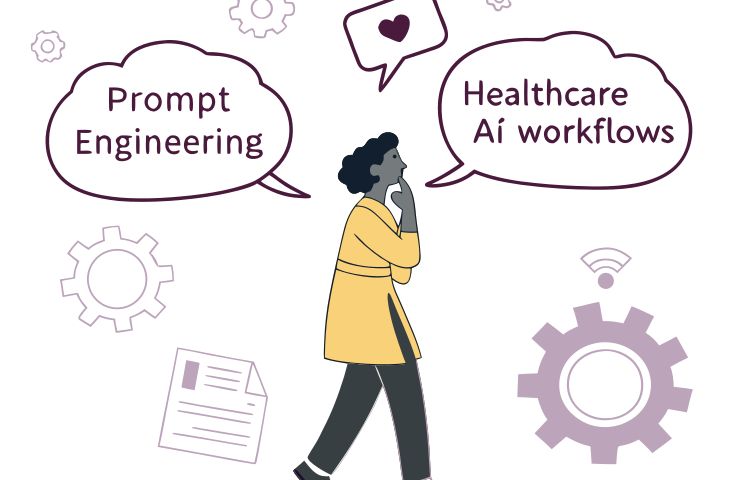
When I first stumbled into the world of Prompt Engineering, I had no idea it would become the thread weaving through so many late-night epiphanies and midday coffee breaks. I remember scribbling my earliest prompt drafts on napkins at a diner, refining them as bacon sizzled and espresso machines hissed. In job interviews, I’d sketch out how a tiny rephrase could transform a model’s reply. During tough days when deadlines loomed or personal setbacks knocked me off balance, diving into prompt crafting offered a strange comfort—like solving a puzzle that never felt quite complete.
An Unverified Collaboration Surfaces
Amid that obsession, I recently came across a market-style article suggesting that Prompt Inversion—an applied AI lab known for enterprise-grade systems—has teamed up with an unnamed partner to bring AI-driven tools and NLP capabilities to healthcare data management. The write-up reads like promotional industry content, and the collaboration details aren’t confirmed beyond its own wording. Yet even as I file that claim under “interesting but inconclusive,” it sparked a new wave of ideas about how structured prompts and retrieval-augmented workflows might ease the burdens of clinical documentation.
Why Prompt Engineering Matters in Healthcare
Over the past few years, healthcare organizations have locked horns with mountains of unstructured text—clinical notes, discharge summaries, intake forms. Natural Language Processing systems began tackling entity extraction and classification long ago, but large language models took things to a new level, offering summarization, context-aware drafting, and even decision-support suggestions. That leap, however, came with a catch: models can hallucinate, stray off-topic, or misinterpret critical medical nuances.
Enter prompt engineering. By carefully designing instructions, templates, and guardrails—telling a model to pull only from approved clinical sources, to output in a structured JSON, to flag ambiguous entries—teams can coax more accurate, relevant results. In practice, that means a clinician might receive a concise summary of overnight notes with clear action items rather than wading through paragraphs of free text. Or an administrator could automate coding suggestions with fewer manual reviews. Both boost efficiency, but they hinge on the quality of those underlying prompts.
Background and Context
Prompt engineering didn’t appear overnight. Early generative AI systems showed that tiny wording tweaks could dramatically shift model behavior, so practitioners began cataloging best practices: specify roles, define output format, set source constraints. Over time, the field evolved into a broader craft of context orchestration—linking prompts with retrieval systems, validation checks, and workflow integration. In healthcare, that trajectory mirrors the longer history of NLP in clinical informatics: from basic entity recognition to complex summarization and decision-support pipelines.
Meanwhile, consultancies and labs like Prompt Inversion have positioned themselves as bridges between research prototypes and production-ready solutions. They offer secure, scalable deployments and claim expertise in prompt design, model evaluation, and governance. Even if the specific collaboration remains unverified, the notion of an AI lab advising hospitals on prompt engineering aligns with broader industry moves toward specialized AI consulting services.
Growing Market, Caution Required
Multiple industry reports project rapid growth in the prompt engineering market, suggesting that enterprises are eager to package prompt design as a service offering. On one hand, that creates opportunities for vendors to standardize prompts, develop repositories of proven templates, and train in-house teams. On the other, healthcare’s regulatory landscape raises the stakes. Models that misinterpret protected health information, hallucinate diagnoses, or leak sensitive data can trigger compliance violations and patient safety hazards.
Cautious voices in academia and industry stress the need for clinical validation. It’s one thing to fine-tune prompts in a sandbox; it’s another to deploy them against live electronic health record systems. Guardrails must include human-in-the-loop checks, robust logging, and continuous monitoring. Only then can prompt engineering move from a promising craft to a trusted pillar of AI-driven healthcare workflows.
Challenges on the Road Ahead
Even the best-designed prompts can be vulnerable. Prompt injection attacks, where malicious inputs subvert intended instructions, pose real risks—especially in environments handling patient data. Bias and fairness concerns also loom large: if a prompt implicitly skews toward certain populations or phrasing, model outputs may perpetuate disparities.
Then there’s the ever-present trade-off between model complexity and cost. Large language models deliver powerful capabilities but incur significant compute and inference expenses. Balancing throughput, latency, and budget requires careful orchestration—choosing the right model for each task, caching frequent queries, and refining prompts to minimize back-and-forth iterations. In healthcare, where volume can spike unpredictably, that cost optimization can make or break a deployment.
Looking Forward
Despite these hurdles, I’m convinced prompt engineering will become an indispensable skill—not just for AI specialists, but for clinicians, data scientists, and administrators. It offers a pragmatic entry point into generative AI, one that emphasizes control, accountability, and alignment with real-world workflows. As the craft matures, we’ll see toolkits for collaborative prompt design, frameworks for validation, and best-practice guides tailored to verticals like oncology, radiology, and population health.
And even if specific partnerships remain under wraps, the broader movement is undeniable: enterprises are scrambling to professionalize prompt design, consulting firms are building service lines, and healthcare leaders are eyeing pilots that promise reduced documentation burden and faster insights. The next chapters will hinge on rigorous evaluation, transparent governance, and genuine collaboration between technologists and care providers.
Optimize with PromptLab
For teams ready to take prompt engineering from hobbyist craft to production-grade capability, PromptLab can help. PromptLab is an AI execution and orchestration layer that sits between your applications and multiple AI model providers, enabling you to run, manage, and optimize prompts at scale through a unified interface and API. It standardizes inputs and outputs across models, provides cost tracking and intelligence, and allows for advanced workflows such as multi-model execution, structured parsing, and agent-based operations. Designed for both experimentation and production use, it gives teams full control over how AI is integrated into their systems while ensuring performance, visibility, and scalability. Learn more at PromptLab by Vernalabs.