
Prompt Engineering Foundations Take Center Stage at Gartner IT Infrastructure Conference in Sydney
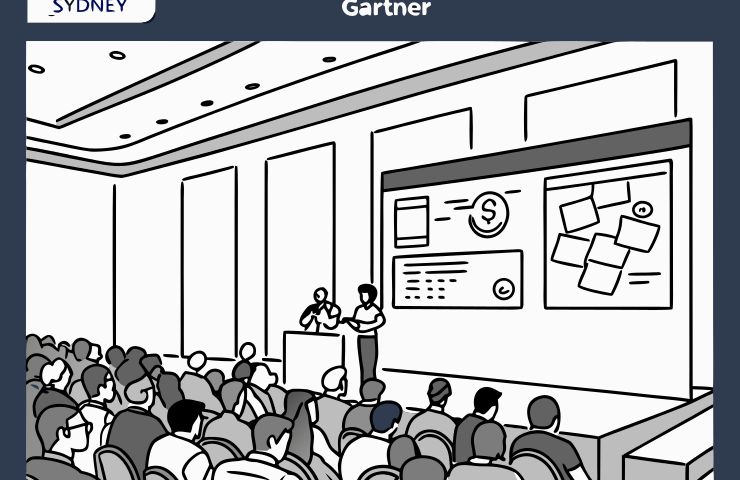
Recently, infrastructure leaders converged at Hilton Sydney for the kick-off of Gartner’s IT Infrastructure, Operations & Cloud Strategies Conference. The message was clear: align hybrid cloud and AI investments with tangible business outcomes. Sessions on cost optimization, resilience and emerging GenAI use cases drew packed rooms. For investors, the takeaways weren’t buzz—they were blueprints for ROI in a market where execution trumps hype.
Market Context
Australian IT spending is on pace to reach $172.3 billion, up 8.9% year-over-year, driven by software, cloud and managed services budgets. Estimates peg AI services outlay at $58.8 billion. Sydney’s 5.23 million residents face steep rent pressures—median weekly rent at roughly $817 AUD—fueling wage inflation in the tech sector. You can’t ignore talent costs when evaluating infrastructure plays. Efficiency isn’t optional; it’s table stakes.
Gartner’s Legacy and Conference Evolution
Since its founding in 1979, Gartner has shaped IT buying decisions with Magic Quadrants and Hype Cycles. This conference series started as small analyst briefings and ballooned into global events. Today’s focus on AI and cloud isn’t a pivot—it’s an evolution. Investors familiar with Gartner’s lens know that when they double down on a theme, budgets follow. That makes this conference a bellwether for next-gen infrastructure spend.
Key Session: Prompt Engineering 101
The standout on Day 1 was Prompt Engineering 101: Foundations for Better AI Results. Gartner analysts unpacked the ReFLECT framework: define a clear role, inject contextual examples, apply few-shot methods, map out logical steps, set output expectations, frame relevant context and tune iteratively. They stressed modular prompts, version control and validation loops. Techniques like chain-of-thought prompting and complexity-based rollouts hit home: better inputs yield better outputs, period.
Session Deep Dive: Complexity-Based Prompting
Beyond ReFLECT, analysts introduced complexity-based prompting—running multiple reasoning chains in parallel and selecting the most consistent answer. It’s a data-driven approach to mitigate hallucinations. Teams still working with single-shot prompts will find this revolutionary. You can fine-tune chain length heuristics, track answer convergence metrics and feed high-confidence chains back into the training loop. It’s a small change with outsized impact on model reliability.
Why Prompt Engineering Matters
At its core, effective prompting is the bridge between human intent and machine precision. Without a disciplined approach, you end up chasing inconsistent AI outputs across teams. By standardizing prompt assets and governance, you cut error rates, accelerate development cycles and reduce service tickets. That directly impacts margins on AI projects—arguably the most volatile cost center in any digital transformation.
Hybrid Cloud and Resilience
Hybrid cloud dominated the agenda. You’re juggling on-prem legacy systems, public cloud bursting and private cloud footprints. Gartner emphasized platform engineering practices that deliver self-service portals, standardized APIs and policy-driven governance. The goal? Elastic capacity without security blind spots. In practice, that means fewer shadow IT projects and faster feature rollouts—a clear win for CapEx-conscious boards.
Platform Engineering in Focus
Beyond infrastructure, platform engineering stole airtime. Teams are building internal developer platforms to package reusable services—CI/CD pipelines, container libraries, automated scaling rules. The pitch: reduce toil, enforce best practices and free up engineers to tackle differentiating features. From an investor perspective, robust platform practices signal lower burn rates and faster time to market on new products.
Agentic AI and Automation
Gartner analysts flagged Agentic AI as the next frontier. Instead of static prompts, you’re deploying autonomous agents that scout data, trigger workflows and self-correct based on feedback. It plays well with IT ops: alert triage, incident remediation scripts and cost anomaly detection. The technology is nascent, but pilot programs are already shaving hours off routine tasks. If you’re hunting productivity levers, this warrants a proof of concept.
Cost Optimization Strategies
Cost remains king. On Day 1, experts drilled into chargeback models, rightsizing compute and leveraging spot instances. Metering and tagging practices came up repeatedly—you can’t manage what you don’t measure. We heard case studies where teams cut cloud bills by 20% in months simply by enforcing tagging and automated shutdowns. That’s hard dollars back to the bottom line.
Value Delivery and Metrics
Tracking outcomes vs. outputs was another theme. Moving from project-based budgeting to value streams means mapping every initiative to a business metric—revenue, churn reduction or compliance. Gartner introduced a lightweight dashboard that ties infrastructure spend to key performance indicators. The pitch: CEOs now demand transparency on IT ROI. Infrastructure teams must deliver or risk budget cuts.
Security and Risk Management
Security stayed front and center. With AI models in the mix, new attack surfaces emerge—prompt injection, model poisoning and data leakage. Gartner outlined a three-step playbook: validate input sources, sandbox model experiments and monitor outputs for anomalous patterns. They also flagged the need to integrate AI governance with existing cybersecurity frameworks. Neglect this at your peril.
Regulatory Outlook
Regulation is tightening. Australia’s AI ethics guidelines demand risk assessments and transparency reports, while global frameworks like the EU AI Act loom on the horizon. Infrastructure leaders must bake compliance into deployment workflows. That adds overhead, but it also creates opportunity for vendors that can streamline audit trails and provide governance dashboards.
Sustainability and Data Center Footprint
Energy consumption came up in closing panels. Hybrid cloud strategies must account for carbon intensity across regions. Gartner highlighted green metrics—PUE, water usage and renewable energy credits—in vendor evaluations. Some teams are opting for carbon-aware scheduling, shifting non-critical workloads to data centers powered by solar or wind. It’s a small step, but it signals the start of carbon-managed IT.
Local Ecosystem and Partnerships
Sydney is a rising tech hub. Local startups in AI ops and cloud management are closing growth rounds at record pace. Major vendors used the sidelines to scout regional partners. If you’re evaluating exposure to APAC growth, look for companies with skin in the local game—joint ventures, talent hubs or dedicated service centers. That proximity accelerates rollouts and lodges you in the heart of demand.
Talent and Skill Gap
One panel hammered this home: cloud and AI skills remain scarce. Even with aggressive university programs, hands-on experience beats certificates. Firms are eyeing internal upskilling tied to prompt engineering frameworks and platform engineering toolkits. As an investor, track capex earmarked for training and certification. Teams that invest in skill depth often deliver smoother rollouts and lower post-deployment tickets.
Vendor Landscape
The vendor hall was packed with major cloud providers, hardware integrators and boutique platform vendors. Every pitch promised unified billing, integrated AI services and simplified governance. Notice who’s bundling prompt management tools into their portfolios. Those incumbents know that mature prompt engineering demands governance, version control and audit trails—features customers will soon expect as standard.
Investment Spotlight
Venture funding is pouring into platform engineering startups that integrate AI toolchains with infrastructure pipelines. Firms offering prompt management dashboards, version control and governance baked into developer portals are drawing early bets. Seed valuations above $50 million aren’t uncommon. For portfolio managers, these startups represent asymmetric upside if they land enterprise clients at scale.
Analyst Predictions
Gartner analysts issued blunt calls: by 2027, prompt engineering will rank among the top three in-house skills for I&O teams. Agentic AI adoption is projected to double operational efficiency by 2028. Hybrid cloud deployments will shift from strategy to table stakes—90% of enterprises will run production workloads across multiple clouds. If these forecasts hold, infrastructure-enabled AI services are only starting to build momentum.
Looking Ahead to Day 2
Tomorrow’s agenda zeroes in on edge computing, AI-driven observability and sustainability benchmarks. Expect deeper dives into carbon-aware scheduling, AI-based SOC tools and real-time cost monitoring. If you want the full picture of where infrastructure and AI intersect, Day 2 will fill in crucial gaps. It could also surface early beta capabilities from major cloud vendors.
Takeaways
Day 1 distilled into three core mantras: standardize prompts, govern cloud spend and build platform primitives. You get consistent AI outputs, lower costs and faster feature delivery. Teams that adopt these will outpace competitors. Those stuck in legacy processes risk being outmaneuvered. The shift to AI-driven operations is underway—don’t treat it as optional.
Bottom Line
Gartner’s Sydney conference reframed infrastructure through an AI-first lens. If you’re an investor, take note: companies embedding prompt engineering and hybrid cloud governance into their DNA stand to capture disproportionate returns. The rest will be left chasing catch-up budgets and scrubbing inconsistent AI outputs. Now’s the time to lean in and decode the playbook.