
Prompt Engineering in Education: Mastering AI Cost Optimization and Classroom Collaboration
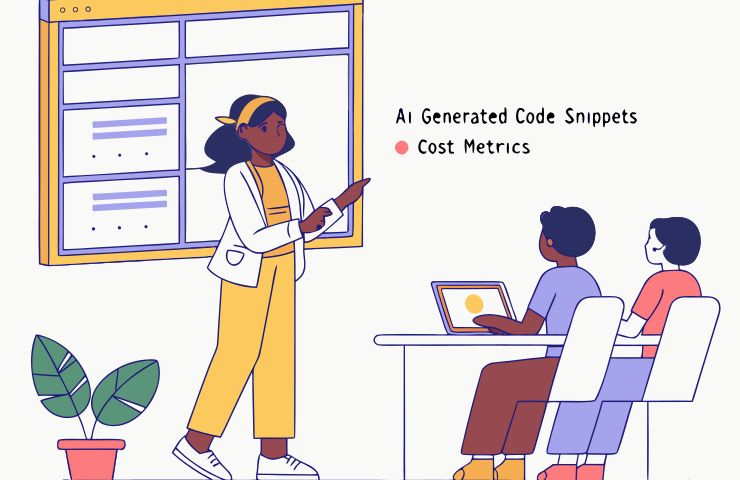
When I first typed “Explain this error message” into ChatGPT, I didn’t set out to discover a lifelong passion—I just wanted to fix my code. But that moment ignited something unexpected. I remember sitting in a cramped dorm room at midnight, walls plastered with sticky notes, mentally wrestling with a syntax error that defied logic. The model’s calm, step-by-step breakdown felt like a soothing mentor guiding me through the storm. From that night onward, I found myself living in a loop of prompt crafting: refining my questions, challenging the AI when its answer fell short, and celebrating small victories when a tweak finally worked. Prompt engineering ceased being a niche technical trick and became my creative obsession, my comfort zone during late-night bugs and brainstorming sessions alike.
Embracing AI as a Learning Partner
Years later, I watch teachers across India wrestle with similar questions: How can AI augment learning without replacing core thinking skills? A fresh UNESCO AI Competency Framework for Teachers offers part of the answer by framing AI as a co-educator rather than an answer machine. It encourages instructors to integrate AI into existing lessons—say, asking students to draft essay outlines with AI assistance before polishing them by hand, or using chatbots to simulate language practice. In coding classes, iterative AI prompts become a sandbox for experimentation; each student learns that the first output is rarely perfect and that value lies in the back-and-forth dialogue. When educators share that mindset, classrooms transform into collaborative labs rather than one-way lecture halls.
I recall leading a workshop for a group of high-school teachers under a national mentoring mission. We spent an afternoon role-playing: some teachers played students asking for help on a data structures assignment, while others impersonated an AI assistant. That simple exercise underscored two truths: writing clear prompts demands conceptual clarity, and vetting AI responses builds critical judgement. By the end of the session, even the most hesitant instructors admitted they felt more like facilitators of inquiry than gatekeepers of knowledge.
Prompt Engineering: Breaking Down the Art
If prompt engineering is sculpture, words are your chisel. Over the years, I’ve honed a set of principles that I now share with students:
- Define the context: Provide background information so the AI knows the scope—mention the language, library, or algorithm involved.
- Assign a role: Start with “Act as a senior Python developer” or “Explain like I’m five” to set tone and depth.
- Specify the output format: Ask for numbered steps, annotated code blocks, or flowcharts to get consistent structure.
- Refine iteratively: Treat the first draft as a hypothesis. Pinpoint what’s missing and narrow your next prompt accordingly.
- Include constraints: Limit response length or enforce performance targets to teach efficiency, such as “Optimize for O(n log n) time complexity.”
Educational resources from institutions like Harvard and Stanford echo these guidelines, emphasizing that the real educational payoff isn’t just a code snippet—it’s the mental exercise of translating fuzzy ideas into precise instructions.
Debugging with AI: A Collaborative Approach
Watching a student correct her own mistake after an AI-assisted hint is one of those teaching moments you never forget. Last semester, a duo pasted a fragment of Java code throwing a null-pointer exception. The AI suggested checking for object initialization. Instead of blindly accepting that, the pair wrote a quick test harness, ran it, and confirmed that a list wasn’t properly instantiated in one branch. They then tweaked their prompt: “Show all possible null checks for this snippet,” which led to a more robust solution. This process gave them not only a working program but also confidence in diagnostic reasoning.
By structuring debugging as a dialogue—student, AI, student—teachers help learners build troubleshooting muscles. They don’t memorize answers; they internalize a method: observe symptoms, propose hypotheses, test fixes, and validate results. It’s a far cry from passively copying a solution and hoping it works on the first try.
Interpreting and Optimizing Code
As an avid explorer of algorithms, I’ve grown to cherish code interpretation sessions. A few semesters ago, I asked a class to submit their implementation of a sorting algorithm and then requested an AI breakdown of its logic. The model paraphrased each loop and comparison in plain language, pointing out inefficiencies like nested loops that could be replaced with more advanced techniques. Students then challenged the AI to refactor their code and compared its merge-sort suggestion with their original bubble sort. By analyzing trade-offs—readability versus speed—they not only grasped performance concepts but also learned to weigh human comprehension against machine optimization.
This practice aligns with advice from education technologists: treat AI outputs as hypotheses rather than final answers. That habit fosters a mindset that’s invaluable in any technical discipline, from data science to software engineering.
Guiding Responsible AI Use
My obsession with AI came paired with an equally deep concern for ethics. After all, models can hallucinate, leak personal data, or perpetuate bias. In classrooms, that risk is magnified when students are still learning to judge source reliability. To guard against these pitfalls, I weave in reflective checkpoints. For instance, after students receive an AI-generated explanation, I ask: “What evidence can you find in official documentation?” or “Could this suggestion pose ethical concerns if applied at scale?”
The newly adopted AI competency framework urges educators to model transparency—showing how prompts evolve, acknowledging uncertainties, and teaching data privacy principles. These lessons aren’t sidebars; they’re central to helping learners become responsible digital citizens. When a student cites an AI-produced fact, I encourage them to track down the original source, reinforcing habits that counteract misinformation.
Upholding Privacy and Ethics
When students engage with AI, they often feed it snippets of their own work or personal reflections. That raises questions about data security, especially when dealing with minors. In response, our school set up a clear policy: any AI prompts that include student names or identify private information must be anonymized or run through an on-premises model. We also teach students to treat AI logs like exam scripts—review them for accidental disclosures and purge them once they’ve served their learning purpose. This approach mirrors broader calls for transparency and privacy in educational AI, principles highlighted by institutions advising on guardrails for responsible AI in schools.
Navigating Cost and Efficiency
Here’s a truth I only grasped after months of experimenting: every extra word in a prompt, every unnecessary context hint, carries a computational price tag. In one multi-school pilot, our monthly AI bill ballooned until a colleague and I held a “prompt audit.” We discovered that framing every request as a long essay had convoluted follow-ups and inflated token usage. By switching to concise templates—bullet points instead of paragraphs, targeted role assignments, and explicit token limits—we slashed costs by nearly half without sacrificing educational value.
Token management turns out to be surprisingly intuitive once you get the hang of it. You learn to spot “prompt bloat”—where extraneous context flows in—and trim it. If you need only a list of function signatures, a succinct request like “List three Python functions to parse JSON” can be 80% cheaper than a verbose setup describing your project background. Teachers and students who audit their prompts regularly become adept at balancing clarity and conciseness. It’s a lesson in thoughtful communication that pays dividends beyond AI bills, sharpening writing and reasoning skills too.
Building a Prompt Crafting Community
Over the past year, I’ve also discovered the power of community. Private channels on collaboration platforms have become watering holes where teachers and tech mentors swap prompt templates, share debugging workflows, and post cost-saving tips. We celebrate each other’s clever role assignments—someone recently posted a prompt that had an AI assume the persona of a code reviewer enforcing style guides, which led to lively debates on indentation standards. In such communities, the collective wisdom helps everyone learn faster than going it alone. Students too can benefit from group debriefs, comparing how different prompts influenced the AI’s answers, and reflecting on why certain phrasings yield clearer outputs.
Professional Growth for Educators
Recognizing this shift, some teacher training programs are embedding prompt engineering modules alongside traditional pedagogy courses. I participated in one such online workshop where instructors practiced designing AI-powered lesson plans, complete with interactive prompts that scaffold student understanding. They received peer feedback on prompt clarity, equity considerations—like ensuring language is inclusive and accessible—and methods to anonymize sensitive data in examples. This sparked a realization: prompt engineering isn’t a tech elective; it’s a core component of digital literacy that belongs in every teacher’s toolkit.
Looking Ahead
I often catch myself daydreaming about the next frontier: multimodal AI tutors that blend text, code, and even drawing boards in real time. Imagine a scenario where students sketch a UML diagram and an AI converts it into runnable code, then walks them through logic. But with each advance comes the need for fresh pedagogical guides, so teachers must stay curious and adaptable. Professional development programs will need to evolve, weaving prompt engineering deeper into teacher training and offering sandbox environments where mistakes become learning milestones rather than budget busters.
It’s a thrilling time: policy makers, educational bodies, and tech providers are converging around the idea that AI literacy is as essential as reading or math. When I look back at that late-night dorm room session, I see more than personal growth; I see a microcosm of what schooling can become—interactive, reflective, and human-centered, even when AI plays a starring role.
How PromptLab Can Help
For educators and technologists ready to scale prompt engineering across classrooms or campus-wide projects, PromptLab offers an AI execution and orchestration layer that bridges multiple model providers. It standardizes inputs, outputs, and cost metrics so you can run experiments without losing visibility. With features like multi-model execution, structured parsing, and agent-based workflows, PromptLab lets you optimize prompts at scale, track your spending in real time, and ensure consistent performance across diverse learning scenarios. Whether you’re piloting an AI tutoring assistant or embedding chat-driven debugging sessions into coursework, PromptLab can help turn your prompt obsession into an institutional strength. Learn more at https://promptlab.vernalabs.com