
Reflections on AI Image Generation Tools
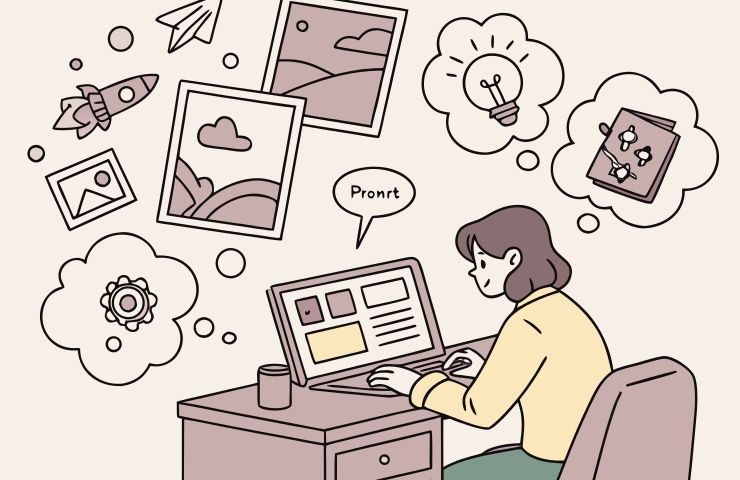
Ever since I first booted up Stable Diffusion on my old laptop, I’ve carried a secret obsession with AI image generation tools. It was the middle of the night, the glow of the screen reflecting off my tired eyes, and I’d typed “a sunflower field at dawn, watercolor style” into a simple command line. Within seconds, patterns of noise faded into petals and pastel skies. That moment felt like discovering fire for the first time: raw, luminous, and entirely in my hands.
These days, I find myself opening a dozen windows—Grok Imagine, DALL-E 3, Midjourney—multiple times every day. In many ways, they’ve become more constant than my morning coffee. When I moved across the country and didn’t know anyone on that first lonely weekend, I didn’t scroll social media or binge TV. I tweaked prompts for an hour, coaxing lifelike portraits from Grok Imagine and experimenting with video clips powered by its Aurora autoregressive engine. I may have been homesick, but those generated worlds kept me company.
The Early Days: From Noise to Art
Back when DALL-E 3 first arrived, it felt like the future knocking at the door. With GPT-4 under the hood, it could digest complex instructions—“a retro diner on Mars at sunset, vibrant neon reflections in the puddles”—and deliver crisp, well-composed images. It was a revelation compared to early GAN experiments from years before, which often spat out warped faces or surreal textures. Suddenly, text-to-image wasn’t the wild west. It was a collaborative studio in my own home.
At roughly the same time, Midjourney was quietly running its diffusion models through a Discord interface, churning out stylized, painterly scenes that felt like museum pieces. I’d join the server late at night, toss in a prompt about a steampunk cityscape, and watch as thumbnails appeared one by one. Each iteration taught me something new: how aspect ratios bend perspective, how style weights add a brushstroke quality. I’d save the best versions, pin them to my desktop wallpaper cycle, and drift off with a smile.
A Love-Hate Relationship with Filters
Of course, it hasn’t been all sunshine and surreal landscapes. I’ve also cursed at DALL-E 3 for its content filters when it refused to depict certain scenes. I’d spend precious minutes crafting the perfect phrasing, only to hit a wall. That’s when I discovered Grok Imagine, newly released via its API, boasting a more permissive stance on creative content. It raised eyebrows—some folks saw it as too relaxed on moderation—but to me, it was freedom. I could explore darker moods, more nuanced scenes without worrying about an automatic block.
But freedom comes with responsibility, and I’ve learned that the more permissive a tool, the more careful I must be. Generating deepfakes or overly sexualized images is tempting, but I know the pitfalls. A single misstep can feed into broader debates on ethics and regulation. Yet even as I respect the boundaries, I admire the raw potential. The Aurora mixture-of-experts architecture behind Grok Imagine sequentially stitches tokens into photoreal images or native video clips, syncing audio and motion. It’s engineering wizardry, and I can’t help but marvel at it.
Prompt Engineering: The Secret Sauce
If there’s one skill I’ve honed more obsessively than brewing perfect coffee, it’s prompt engineering. Techniques like specificity—naming camera types or lighting conditions—iterative refinement—tweaking one variable at a time—and negative prompts to exclude unwanted artifacts have become second nature. Whether I’m working in Stable Diffusion on my desktop GPU or firing off a request to Midjourney in Discord, these principles hold true. It’s almost absurd: the same trick that yields a cinematic panorama in one tool also unlocks a surreal portrait in another.
I’ve bookmarked countless guides and even set up my own cheat sheet to track which phrases work best on which platform. For instance, mentioning “shallow depth of field” pushes Stable Diffusion toward that DSLR look, while “cell-shaded” in Midjourney triggers a comic-book aesthetic. When I talk to friends about this, they roll their eyes. “You’re basically gaming a five-billion-parameter model,” they say. But to me, it’s a form of artistic expression—like learning how to blend paints or mix colors on an easel.
The Market That Fed My Obsession
Of course, my personal habit exists within a booming industry. The global AI image generation market was valued at roughly $0.43 billion in 2025 and is projected to reach about $0.51 billion this year, growing at a compound annual rate around 17.4%. Creatives, marketers, educators—they’re all adopting these tools to crank out visuals faster than ever before. Even platforms like Pollo AI have emerged, bundling multiple generators under one roof to smooth out workflows.
My fascination only deepened when I learned about the massive bets behind the scenes. xAI, founded by Elon Musk, poured close to $20 billion in a Series E round to train and scale Grok Imagine on its Colossus supercomputer. Meanwhile, Stability AI and open-source communities push for accessibility, optimizing Stable Diffusion to run on consumer hardware. And of course, OpenAI and Microsoft continue to refine DALL-E models with GPT-4 integrations. It’s dizzying, the pace of innovation.
When Creativity and Code Collide
What fascinates me most is the blend of cold algorithms and human intuition. Behind every polished image is a tapestry of neural weights, internet-scale datasets, and inference pipelines. Yet at the same time, a single well-chosen word can tilt an entire composition—a sunset becomes crimson, a cityscape gains neon reflections, a portrait gains soul.
I learned to appreciate that tension when I started using Stable Diffusion offline. There’s a hum of my workstation CPU fan, a flutter of progress bars, and the thrill of seeing noise coalesce into textures. But online, the experience shifts: I’m racing GPUs on Midjourney, waiting for thumbnails to load in Discord, or tapping API calls to Grok Imagine for a quick video loop. Each environment scratches a different itch, and I’ve fallen for them all.
Why This Obsession Matters
To most people, generating images with AI is just another hobby. For me, it’s a mirror—an exploration of how technology reshapes creativity. These tools have comforted me through hard times, fueled my late-night sprints, and given me a new language for self-expression. They’ve also tested my patience when filters block my vision or when cloud APIs throttle my requests. In those moments of frustration, I remind myself that it’s all part of the journey.
Looking forward, I see my bond with these technologies only growing. Prompt engineering will keep sharpening my instincts, while new architectures promise richer, more dynamic content. Whether it’s photoreal car renderings—thanks to xAI’s Tesla ties—or dreamy, stylized art from community-driven diffusion projects, there’s no shortage of wonder.
Every new tool release feels like unwrapping a gift: unknown potential waiting to surprise me. Even when a model disappoints, that sense of anticipation keeps me returning.
A Sincere Reflection
This obsession is part of who I am—equal parts technologist, artist, and dreamer. It’s given me license to play with forms and fantasies, forging landscapes that exist only in code. More than once, I’ve stared at a generated scene, feeling a twinge of awe and a hint of envy at how seamlessly AI captured what I’d tried to sketch by hand.
I admit I love it too much sometimes. I’ve canceled plans just to chase a prompt. I’ve argued online about which model nails text-in-image best or which engine renders reflections more faithfully. So here I am, still hitting “generate,” still tweaking one more parameter, because I’m convinced the next image might just be the one that changes everything. It’s become a thread woven through my life’s tapestry—a constant companion in joy and in doubt.