
Why LLM Summarization Fails the Identification Step
Quick Take
LLM summarizers skip the core identification step. They jump into generation. That mirrors a causal inference error: estimating without spotting key variables. Investors rely on these summaries for fast insights. Yet unchecked outputs risk strategic missteps.
These automated summaries often serve as ground truth in internal docs. Teams use them in RAG systems and dataset annotation. That makes any omission a hidden liability. Accuracy here isn’t optional. It’s a foundation.
Identification Gap in Summarization
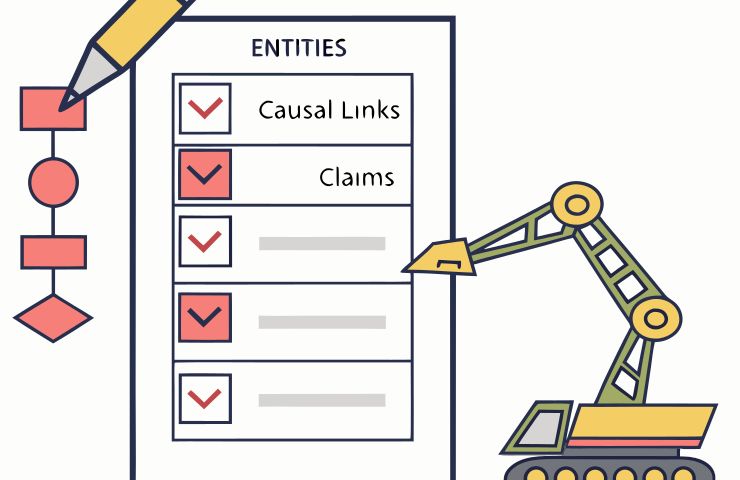
The identification step maps out entities, claims, and causal links before aggregation. Human summarizers intuitively do this. LLMs typically don’t. They pack context into hidden states and decode a condensed narrative without calling out critical elements first.
This shortcut mirrors an omitted variable in causal graphs. You estimate an effect without confirming the driver. Source texts contain complex arguments. Without explicit flagging, models gloss over nuances or inject context-free assertions.
Downstream systems, from chatbots to analytics dashboards, ingest those summaries. They assume faithfulness. Mistakes propagate. A misplaced causal claim in one summary can mislead product decisions or customer communications.
Some teams now spot check outputs manually. That defeats the automated throughput goal. It adds cost and delays. And manual review itself can miss subtle framing errors introduced by the model.
Historical Shifts
Hans Peter Luhn’s extractive method in 1958 picked sentences based on word frequency. It was transparent if crude. Extractive techniques dominated for decades for their fidelity.
The neural wave shifted that in the 2010s. Sequence-to-sequence RNNs introduced attention. Suddenly models could paraphrase. Abstractive outputs gained fluency, but started hallucinating and omitting points.
The transformer era from 2017 supercharged this. LLM summarization moved to autoregressive generation at scale. Long context windows. Strong coherence. But faithfulness took a back seat.
Extractive hybrids persist. Map-reduce and iterative chunking try to balance scope and cost. Yet few pipelines enforce a discrete identification pass ahead of summary assembly.
Mechanics of the Missed Step
In theory, you break down text into entities, relations, facts. Then you rank and cluster. Finally you write a cohesive narrative. That intermediate stage is the identification step.
LLMs embed meaning in hidden vectors. They skip explicit tagging. The model sees the text and computes a summary score. Then it decodes freehand. No checklist. No annotation. Just probabilities.
That approach trades structure for speed. It also trades auditability for opacity. You can’t trace why a fact showed up or why a claim got dropped. You just see the result.
Missing entities. Dropped qualifiers. Elided caveats. Those are all symptoms of a missing identification step. Each one chips away at faithfulness.
Real-World Risks
In RAG systems, summaries fuel the context fed to agents. A flawed summary leads to garbage in, garbage out. Users see confident assertions about topics the source never supported.
Annotation pipelines that substitute machine summaries for human notes can taint training sets. Models trained on flawed data learn to hallucinate more aggressively over time.
Compute cost spikes when you retry or verify summaries post-hoc. Your cloud bill rises. GPU hours multiply. Throughput plunges.
Misinformation risk escalates. Enterprises face compliance and legal exposure if summaries misstate facts. Regulatory bodies are already watching high-risk AI applications.
The EU AI Act flags NLP tools as potentially high risk. Unreliable outputs could trigger audit requirements or usage restrictions. That jeopardizes vendor roadmaps.
Customer trust erodes. You lose repeat usage. Investors penalize growth stalls tied to quality issues. AI projects can stall overnight when confidence drops.
Training and inference for large models consume significant energy. A single large query can use as much energy as a household per day. Inefficient loops over flawed summaries exacerbate environmental impact.
The market is fragmenting. Vendors tout pure LLM solutions but hybrids and causal-aware platforms are gaining traction. Firms with proven verification modules are seeing stronger adoption curves.
Academic labs highlight these flaws in top conferences. That spills into open-source toolkits. Companies ignoring this risk fall behind in community-driven innovation.
Solutions on the Table
Prompt engineering adds structure. You can ask the model to list entities, claims, data points first. Then to stitch them into a narrative. It roughly simulates the identification pass.
Few-shot and zero-shot variations provide examples or strict instructions. They can improve alignment, but they remain brittle on complex texts without explicit verification.
Chain-of-thought prompts ask the model to think step by step. That injects an internal identification stage. Benchmarks show up to 50% fewer hallucinations and a jump in factual consistency.
Verification frameworks like Q-S-E break summaries into atomic claims, check each against the source, and flag inconsistencies. They lift faithfulness but add latency.
Hybrid extractive-abstractive systems tag key sentences first, then paraphrase. They preserve source anchors. That hybrid path restores part of the missing identification step.
Decompose-verify workflows split long documents into chunks, summarize each, then coalesce with fact checks. You get fewer omissions. You pay in compute and engineering complexity.
Academic research like a Nature Scientific Reports framework shows structured hallucination detection via Q-S-E can cut error rates by over 30%. Early adopters report tangible quality gains in internal trials.
Some hybrid providers offer dashboards that flag unverified claims. They integrate with workflows, offering audit trails and compliance logs, which investors can inspect as risk mitigators.
Implications for Investors
Invest in startups that bake identification into their pipelines. Look for vendors offering causal-aware prompting or hybrid systems. They aim for trust, not just speed.
Beware companies claiming full automation with zero oversight. They expose themselves to rework costs and possible regulatory fines. Speed alone doesn’t cut it.
Monitor compute usage trends. If cost per summary spikes, they’re probably re-running verifications or human checks. That eats margins.
Demand transparency. Ask vendors how they map entities and claims. If they can’t show an audit trail, assume hidden risks.
Check compliance roadmaps. Firms that anticipate EU AI Act audits stand on firmer ground. Others may scramble under new rules.
Keep an eye on benchmark scores around hallucination rates. Look for third-party audits or independent evaluations, not just vendor claims.
Catalyzing these improvements requires skilled AI teams. Assess engineering talent and depth of research partnerships. That’s often the best predictor of sustainable edge.
M&A activity may accelerate for firms with robust verification IP. Watch for startups that patent entity mapping or causal-aware summarization layers.
Call to Structured Action
AI leaders need to codify the identification step. Define entity and relation extraction rules. Bake them into prompts or pre-processing modules.
Adopt verification layers. Implement Q-S-E or similar. Automate fact checks before summary ingestion in downstream apps.
Invest in hybrid models. Combine extractive anchors with abstractive polish. Balance fidelity and fluency.
Audit existing pipelines. Spot where summaries gloss over data. Patch those gaps. Iteration beats ignoring the problem.
Future-proof your workflows. Align AI outputs with engineering best practices. That preserves trust, controls costs, and reduces legal exposure.
Fluency without foundation is a liability. Start treating summaries as hypotheses to verify, not as ground truth. That small mindset shift pays dividends.