
Why Prompt Engineering Alone Falls Short for Agentic AI at Scale
You’ve seen the pitch: feed an external LLM a clever prompt and let it run an autonomous workflow. It works in demos. It stumbles under production load.
The Development Trap
According to sources, an unspecified organization built an agentic AI prototype by chaining prompts to an external LLM. Early tests passed. Low user volume. Limited tasks. The team leaned into prompt tricks—role prompts, in-context examples, constraints—to nudge the model toward desired behavior.
Then usage spiked and complexity exploded. Prompt cracks widened. Coordination between prompts broke down. The system failed to keep pace.
Why Prompt Engineering Breaks at Scale
Prompt engineering works by tapping statistical patterns in a model’s training. You clarify instructions, feed examples, assign a persona, specify constraints. The model echoes those cues. Up to a point.
Scale adds two roadblocks. First, edge cases multiply. You can’t cover all states in a growing system with static text. Second, prompt interdependencies balloon. A tweak in one prompt ripples through adjacent tasks, spawning inconsistent outputs.
Agentic AI’s Architectural Demands
True agentic systems juggle multi-step goals, maintain state, handle failures, call external tools and APIs, loop through reasoning and action. They need more than occasional instruction refinement. They demand explicit control flow, error handling, memory, tool interfaces and feedback loops.
The Unified Architecture Alternative
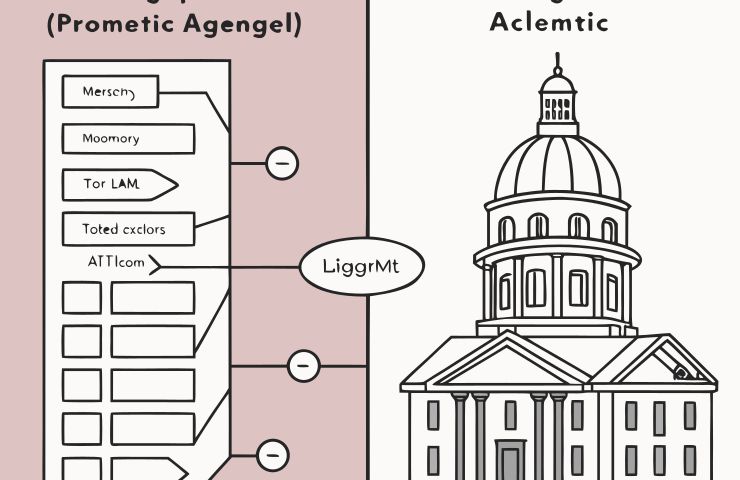
Unified architecture embeds control logic in design rather than in prompts. It layers components—reasoning engines, memory stores, tool selectors, execution frameworks—around a core model. Each piece has a clear interface and data path.
You don't ask the model to remember. You store context in a memory module. You don't rely on text cues to switch tools. You invoke a tool‐selection interface. You don't hope for smooth recovery. You implement explicit error‐handling routines.
How PromptLab Scales AI in Organizations
PromptLab is an AI execution and orchestration layer that sits between your applications and multiple AI model providers, enabling you to run, manage, and optimize prompts at scale through a unified interface and API. It standardizes inputs and outputs across models, provides cost tracking and intelligence, and allows for advanced workflows such as multi-model execution, structured parsing, and agent-based operations. Designed for both experimentation and production use, it gives teams full control over how AI is integrated into their systems while ensuring performance, visibility, and scalability.
How It Scales
A unified approach delivers:
- Consistent behavior across tasks
- Systematic error handling and retries
- Clear debugging paths and observability
- Modular component scaling without reengineering prompts
In contrast, teams chasing prompt fixes often hit a plateau. Horizontal scaling—more GPUs, more parallel calls—doesn’t fix control leaks in prompts.
Investor Implications
This debate matters if you’re backing agentic AI plays. Betting on prompt-only architectures invites technical debt and unpredictable production performance. Refactoring later can double development costs.
Platforms built on unified foundations are maturing. They offer SDKs, explicit state machines, memory layers, tool registries and monitoring dashboards out of the box. They’re positioning for enterprise adoption.
Risks and Warnings
Watch out for vendors glorifying prompt labs without delivering architecture. Demos can mask edge-case failures. Ask for fault-injection tests, chaos drills, performance under load.
Avoid sunk-cost bias. If your team spent months tuning prompts, re-evaluate sooner rather than later. The longer you wait, the steeper the refactoring.
Opportunities
If you move early on unified frameworks, you gain competitive advantage. Reduced downtime. Predictable costs. Cleaner code. Faster integration with enterprise systems and compliance checks.
We’re entering a phase where architectural rigor will separate winners from laggards in agentic AI. Don’t assume a few lines of prompt engineering can carry you through production scale.
Next Steps for Investors
• Drill into your portfolio’s AI roadmap. Are they prompt-first or architecture-first?
• Pressure vendors for architectural documentation, not just prompt libraries.
• Validate performance under realistic loads and failure modes.
• Factor in technical debt of prompt rewrites when modeling ROI.
In the short term, unified architecture investments may look costlier. Over time, they pay dividends in reliability, maintainability and scale.
In agentic AI, architecture matters more than clever prompts. Bet accordingly.